
Fortnite vs Roblox: Which Creator Economy Actually Pays in 2026?
Two of the biggest games on the planet both crossed the same milestone in 2026: they have each paid out more than $1 billion to the people who build inside them. Epic Games announced at Unreal Fest in June 2026 that it has paid over $1 billion to creators using Unreal Editor for Fortnite (UEFN) since the tool launched in 2023. Roblox paid out $1.5 billion to creators through its Developer Exchange program in fiscal year 2025 alone.
So which one actually pays you? That is a harder question than the headlines suggest, because Fortnite and Roblox move money in fundamentally different ways. One pays you a share of a communal pool plus direct item sales; the other pays a fixed cut of every Robux spent inside your game. Here we compare the two creator economies head to head — revenue shares, payout rules, barriers to entry, and realistic earnings — so you can pick the platform that fits your skills.
The Headline Numbers: Fortnite vs Roblox in 2026
| Metric | Fortnite (UEFN / Creative) | Roblox |
|---|---|---|
| Total paid to creators | Over $1 billion since UEFN launched in 2023 | $1.5 billion in FY2025; $923 million in 2024 |
| Creator content share of playtime | Creator-made islands took 47% of all Fortnite player hours in May 2026 | Roblox is creator-only by design — effectively 100% of playtime is creator content |
| How creators get paid | Engagement payouts from a shared pool, plus direct in-island item sales and Support-a-Creator codes | Developer Exchange (DevEx): convert earned Robux to cash, plus Premium Payouts |
| Headline revenue share | 100% of V-Bucks value on in-island sales through end of 2026, then 50% | Creators keep about 70% of Robux spent in their experience; DevEx converts at $0.0038 per Robux |
| Minimum payout | $100 in accumulated earnings | 30,000 earned Robux (about $114 at the standard rate), plus verified email and good standing |
| Age requirement | 18 or older to enroll in the payout program | 13 or older to earn Robux; stricter rules apply to cashing out |
Sources: Epic Games at State of Unreal, Unreal Fest Chicago (June 2026), reported by IslandAtlas and 80.lv; Roblox FY2025 results and creator-economy reporting (2026). Figures are platform totals, not what an individual creator should expect.
How Fortnite Pays Its Creators
Fortnite’s creator economy has three income streams.
1. Engagement payouts: a share of a communal pool
Epic places 40% of eligible net revenue from the Fortnite Item Shop and related real-money purchases into an Engagement Pool, then divides it among eligible islands based on active playtime and player retention. Your island does not earn a percentage of anything it sold — it earns a slice of a pot whose size and division change every month.
That model rewards one thing above all: keeping players inside your island. In May 2026, creator-built islands captured 47% of all Fortnite player hours, and Epic says more than 75 million monthly active users now play games inside Fortnite. But because the pool is shared, your payout depends on how your island performs relative to every other island that month.
2. In-island transactions: direct sales, and the 2026 window
The biggest change arrived with in-island transactions, rolled out in early 2026. For the first time, UEFN creators can sell items directly inside their islands — unlockable areas, abilities, consumable boosts, bundles, and paid areas — and get paid for the sale itself rather than for the engagement around it.
The rate is unusually generous, and it has an expiry date. According to Epic’s official announcement, creators earn 100% of the V-Bucks value from in-island transactions through the end of 2026. From January 2027, the standard rate drops to 50%. After platform and store fees, that 100% works out to roughly 74% of retail money spent, falling to about 37% in 2027.
Epic reports that more than 3,000 islands already earn more from in-island transactions than from engagement payouts, and that over 75% of all in-game transactions now come from experiences outside battle royale. If you can design something players want to buy, this is the highest-paying lane in either ecosystem right now. Just remember the clock: the 100% window closes on December 31, 2026.
3. Support-a-Creator codes: the small, steady stream
Support-a-Creator pays creators around 5% of eligible purchases made by players who entered their code. It will never be your main income, but it is the easiest stream to start: it rewards having an audience anywhere, even before your first island finds traction. Note that you cannot sell standard Fortnite cosmetics such as outfits or emotes inside your island — Epic restricts in-island sales to gameplay items, bundles, and paid areas.
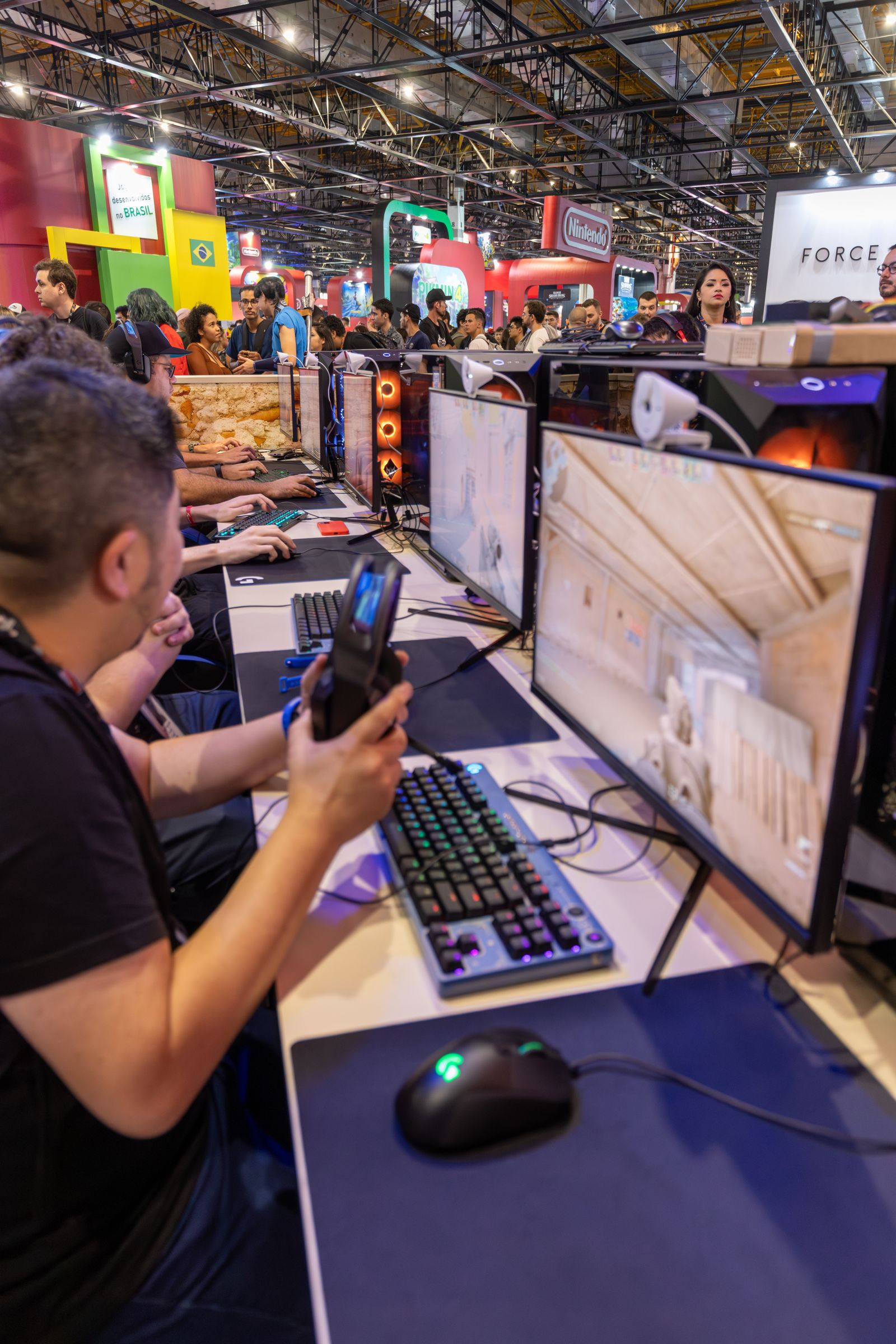
Before you build, it pays to understand what pulls Fortnite players in. Our guide to the most popular Fortnite characters shows which franchises and original heroes draw the biggest crowds — useful context when choosing an island theme.
How Roblox Pays Its Creators
Roblox has been paying creators for far longer, and its system is more predictable — arithmetic you can plan against, rather than a monthly pool you have to guess at.
DevEx: the core payout
Roblox creators earn Robux inside their experiences, then convert it to real money through the Developer Exchange (DevEx) program. The standard rate in 2026 is $0.0038 per earned Robux; spending from age-verified US players aged 18 and over converts at a higher $0.0054 rate, about 42% more.
The revenue share works in two steps. Creators generally keep 70% of the Robux players spend inside their experience — through Game Passes (one-time purchases), Developer Products (repeatable purchases such as currency), and private servers. For every 10,000 Robux spent in your game, you keep roughly 7,000 Robux, which cashes out at about $26.60 at the standard DevEx rate. You net roughly a quarter of the retail money players spend — less than Fortnite’s 2026 promotional rate, but stable and published.

Premium Payouts and the long tail of income
Beyond direct sales, Roblox pays Premium Payouts based on Premium subscribers’ time in your experience, plus earnings from immersive ads and avatar-item sales. The FY2025 DevEx total of $1.5 billion was up 63% year over year, with the fourth quarter alone hitting $477 million.
To cash out, you need at least 30,000 earned Robux, a verified email address, and good standing. That threshold is low enough for a modestly successful game to reach; the hard part is building a game people return to. If you are new to the platform, start with our list of the best Roblox games to play to see what the top experiences do differently — progression systems, social hooks, and live events that keep players coming back.
Head to Head: The Numbers That Actually Matter
| Factor | Fortnite (UEFN) | Roblox |
|---|---|---|
| Best-case revenue share (2026) | ~74% of retail on direct item sales | ~25–27% of retail after the Robux cut and DevEx conversion |
| Revenue share from 2027 | ~37% of retail on direct sales | Unchanged — the formula is stable |
| Payment model | Shared engagement pool + direct sales | Fixed cut of every sale + Premium Payouts |
| Predictability | Low — your pool share changes monthly | High — the formula is published and fixed |
| Skill needed to start | Higher — UEFN is a full Unreal Editor; Verse scripting helps | Lower — Roblox Studio with Luau is the easiest entry point in game development |
| Discovery | Discover feed; new islands get boosted to 100 players and 10,000 impressions | Search, charts, and the algorithm; a huge young audience already browsing |
| Audience | 75M+ monthly players inside creator islands; broad age range | Massive, predominantly young audience |
The Reality Check: What Most Creators Actually Earn
Both economies are winner-take-most systems, and the median creator earns very little.
On Roblox, more than 42,000 creators participate in the DevEx program, and the median participant received about $1,500 across the twelve months ended June 30, 2026. The top 1,000 creators, by contrast, averaged roughly $1.3 million each in 2025. An estimated 85% of developers earn under $100 per month.
Fortnite’s distribution is similar, even if Epic publishes less detail. More than 3,000 islands now earn more from direct sales than from engagement payouts — which sounds like a lot until you remember hundreds of thousands of published islands compete for the same pool and the same Discover slots. A small number of polished, well-marketed islands take the overwhelming share of both playtime and payouts.
Neither platform is a reliable income source for a beginner. Treat creator income as a long game — months of building and iterating before the first meaningful payout — and keep a realistic plan B. If building is not for you yet, our roundup of side hustles for gamers covers streaming, coaching, and other ways to earn from gaming. And remember the quality bar: players compare your island with the best games to play in 2026, not with other beginners.
Which Platform Should You Pick?
Pick Fortnite (UEFN) if: you already know Unreal Engine or 3D building, you can design items players genuinely want to buy, and you can ship something polished before the 100% in-island sales window closes at the end of 2026. The ceiling per sale is the highest in either ecosystem right now, and the audience skews older with more spending power. Just go in knowing the engagement-pool income is unpredictable and the headline rate halves in January 2027. To start, download Unreal Editor for Fortnite (free), enroll in the Creator Portal, and publish a small polished island first.
Pick Roblox if: you are learning game development, you want the lowest barrier to entry, or you are building for a young audience that already lives on the platform. Luau is far easier to learn than Verse and Unreal, the payout formula is transparent, and a game that finds its niche can earn steadily for years. To start, download Roblox Studio (free), learn Luau through the official tutorials, and ship a simple game with one clear loop — an obby, a simulator, or a tycoon.
Build on both if: you have the time. The skills do not fully transfer — UEFN and Roblox Studio are different tools — but the design instincts do: retention loops, fair monetization, and live events that bring players back. Many successful creators prototype an idea on Roblox, where iteration is fast, before investing in a polished UEFN version.
One practical note for either path: creating means long sessions playtesting online with friends and collaborators, often across regions. A stable, low-latency connection matters more than raw speed when you are testing multiplayer islands — see our guide to the best VPN for gaming if lag is getting in the way of your build sessions.
Verdict: Roblox Pays More Predictably — Fortnite Pays More Per Sale (For Now)
If you want a straight answer: Roblox is the better platform for most creators in 2026. Its payout formula is transparent, its tools are the easiest to learn, and its $1.5 billion in FY2025 payouts comes from a system that has paid creators for years. The share per dollar is lower, but you can model your income on day one.
Fortnite is the better bet if you have Unreal skills and can move fast. Through December 31, 2026, its in-island sales rate is roughly triple Roblox’s effective share — the best deal in the creator economy. But it is a limited-time window, and from January 2027 the advantage narrows sharply.
Either way, the platforms are not the hard part. Building something players love, getting it discovered, and keeping them coming back is.
FAQ
Can you really make money from Fortnite Creative?
Yes. Epic has paid over $1 billion to UEFN creators since 2023, through engagement payouts, in-island item sales, and Support-a-Creator codes. But earnings are heavily concentrated: a small number of popular islands take the overwhelming share, and most creators earn little or nothing.
How much does Roblox pay per 1,000 Robux?
At the standard 2026 DevEx rate of $0.0038 per Robux, 1,000 earned Robux converts to $3.80. Spending from age-verified US players aged 18 and over converts at the higher $0.0054 rate, or $5.40 per 1,000 Robux.
Do you need to be 18 to earn money on Fortnite or Roblox?
Fortnite requires creators to be 18 or older to enroll in its payout program. On Roblox, you can earn Robux at 13, but cashing out through DevEx has stricter requirements, and the higher US 18+ rate only applies to spending from age-verified adult players.
Is Fortnite’s 100% creator revenue share permanent?
No. Epic pays creators 100% of the V-Bucks value from in-island transactions only through the end of 2026. From January 2027, the standard rate is 50% — roughly 37% of retail money spent, after platform and store fees.
Income disclaimer: creator earnings vary widely and are not guaranteed. The figures in this article are platform-wide totals and published rates from Epic Games and Roblox Corporation, not promises of individual income. Most creators earn modest amounts, and building a sustainable income typically takes months of work.